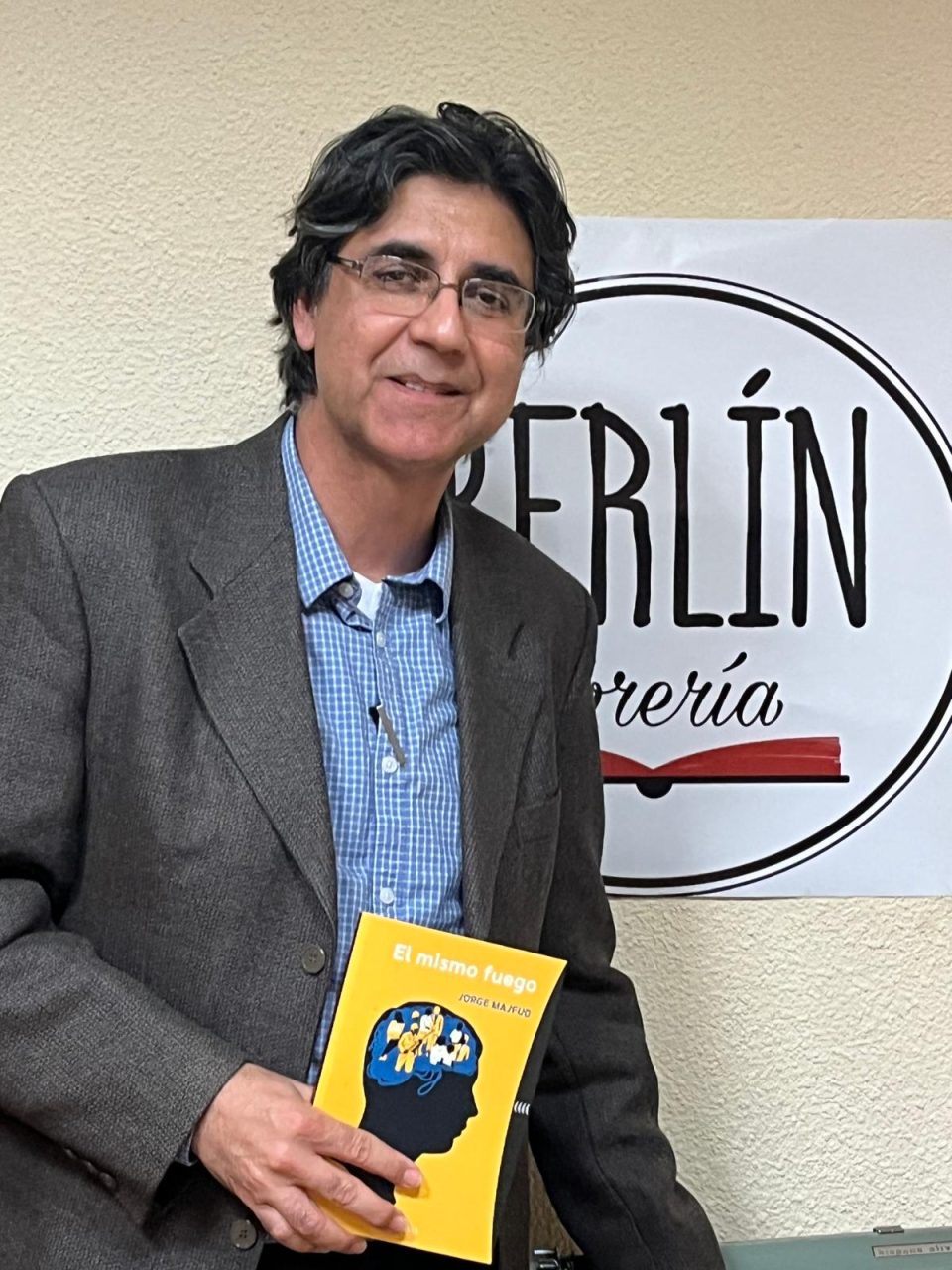
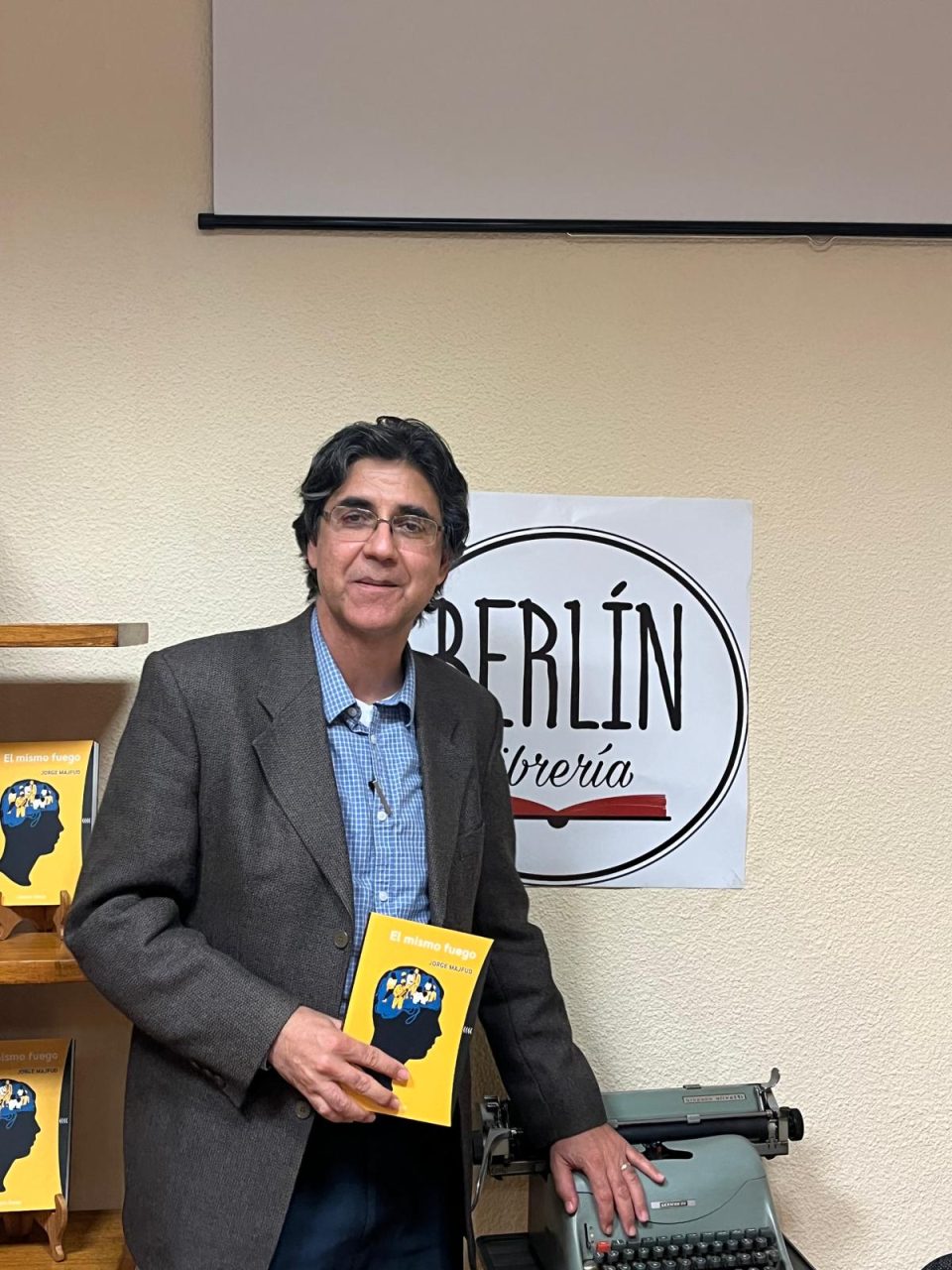
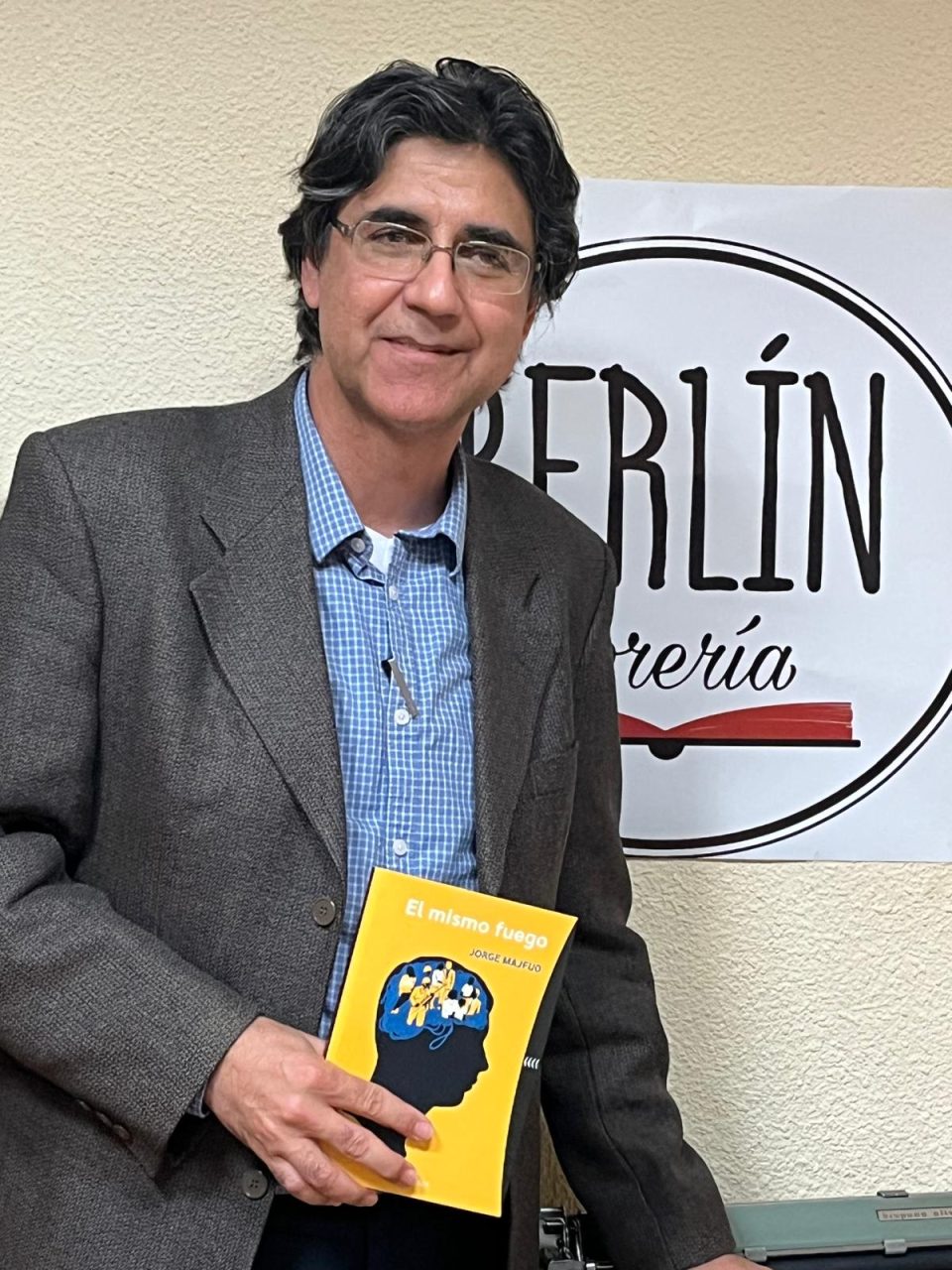
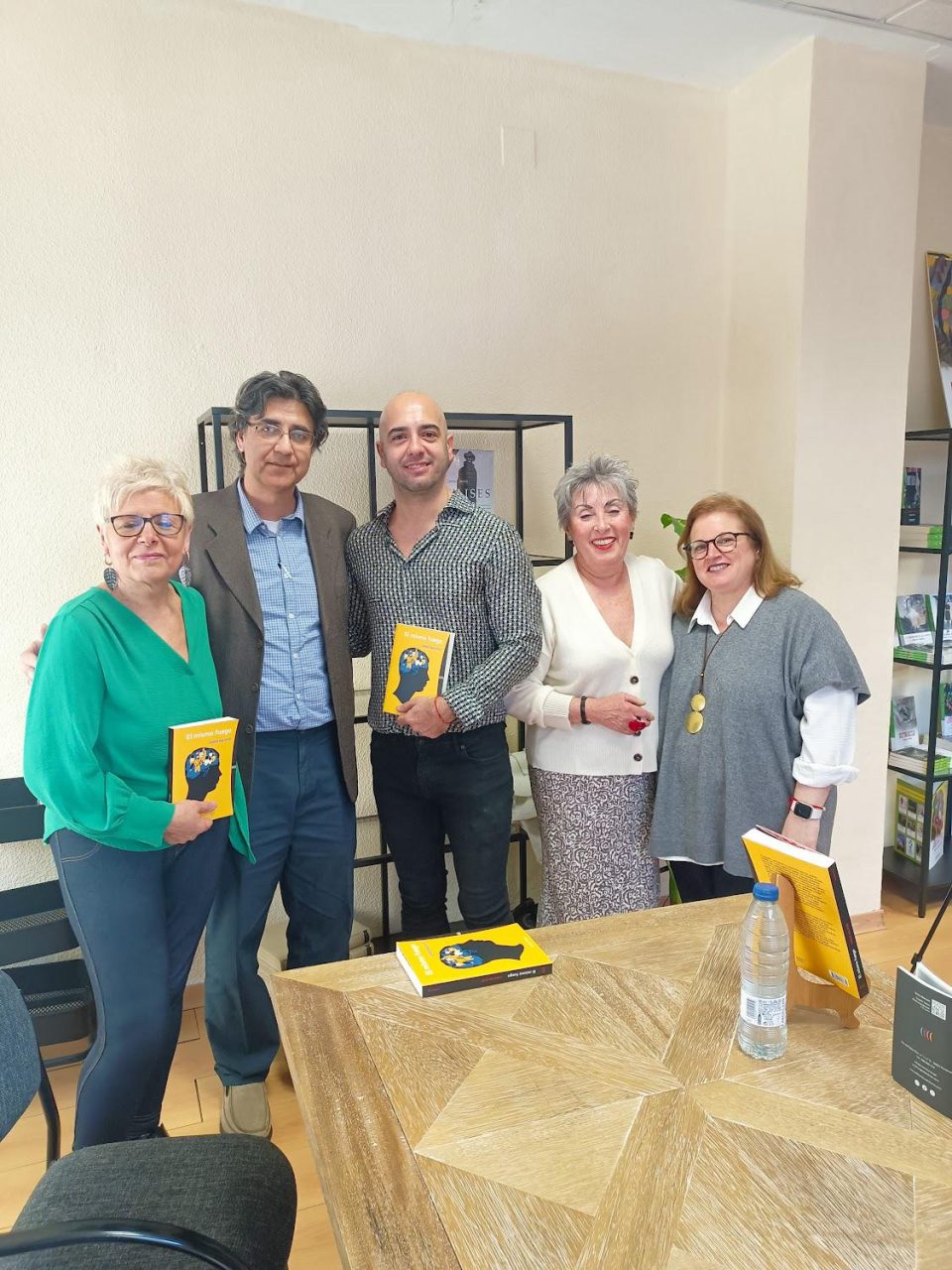
Presentation of the book “El mismo fuego” by Jorge Majfud
27 de March de 2025
Jorge Majfud is a Uruguayan-American novelist, essayist, translator, and university professor. A descendant of Lebanese and Spanish immigrants, he graduated in Architecture from the University of the Republic of the Uruguay. He has worked as a mathematics teacher and structural calculator in various countries. He is currently a professor at Jacksonville University and regularly contributes articles and interviews to various internationals media outlets. His books have been published mainly in the United States, Spain and Latin America.
He has published novels and essays that appeared in media outlets such as Milenio Diario from México, La República from Montevideo, Panamá América, Cambio 16 from Spain, La Vanguardia from Barcelona, Courrier International from Paris, Hispanic Culture Review from George Mason University, Revista de Crítica Literaria Latinoamericana from Dartmouth College, Pegaso from Oklahoma University, Texas State University, Washington University Political Review, Chasqui Arizona State University, Hispamerica Maryland University, United Nations Chronicle, UNICEF, Tiempos del Mundo from Washington, Monthly Review and Political Affairs from New York, The Huffington Post, Jornada from La Paz, El Nuevo Herald from Miami, Página/12 from Buenos Aires, Radio Uruguay, Radio Nacional de Argentina, Radio Exterior de España, Radio Popolare Roma, The Zero Hour, NTN 24 TV, Telesur and RT TV, and others.
He is a member of the International PEN club. He received the Excellence in Research Award from Georgia University (2006) and the Faculty Award for Excellence in Scholarship and Professional Activities and First Prize for a novel published in 2018/2019 from Orizzonte Atlantico, Italy. In 2012, he was chosen by Foreign Policy as «Latin America’s most influential intellectual».
In PUV (Publications of the University of Valencia) has published the following titles:
- U.S.A. ¿Confía Dios en nosotros?
- Neomedievalism. Reflections on the Post-Enlightenment Era
- Perros sí, negros no: las raíces y los frutos del racismo estadounidense
- La privatización de la verdad: la continuidad de la ideología esclavista en Estados Unidos
- El otoño de la plutocracia americana
- Crisis de las democracias liberales: el derrumbe de la Pax americana
- Moscas en la telaraña: capitalismo anglosajón y postcapitalismo norteamericano
THE NOVEL El mismo fuego
El mismo fuego (First International Independent Literary Prize from Orizzonte Atlantico for a novel published in 2019) is a novel and an existential autobiography based on the author’s experiences during the last military dictatorship in his country. The actual facts, names, country, and subsequent developments of various tragedies have been altered to protect the truth. With a syntactical structure that lacks the relative pronoun «that», the novel expresses in language the same functional absences that exist in the absolute memory of its protagonist, the child José Gabriel, without preventing him from representing a world that his exaggerated memory records in detail but his understanding cannot encompass in its entirety. «One morning, the children were playing in an old wagon when a gunshot rang out. Why are we born, if we have to die? The years go by, like the trees pass by the train window; and Jorge continues searching for the answer» (Eduardo Galeano).
TEXT OF MY INTERVIEW
Good afternoon to everyone present
First of all, many thanks to Carmen Manuel for inviting me to share this table with her, with the author who brings us together today, and with Vicent Cucarella, whom I just met.
When I started reading the book, I couldn’t put it down, despite my many obligations. However, I have the immense privilege of sharing a table with the author, which allows me to know much more about it.
Since Carmen Manuel and Vicent Cucarella’s presentation of him has been magnificent, all that’s left for me is to ask questions, and I’ll try to make the most of it.
First question: The firs impact was how much it reminded me of Gabriel García Márquez. His novel tells of an immense and intense family saga that shapes the political history of Latin America. Am I right?
Second question: Latin America literature continues to be the great developer of magical realism, even though it originated with the Italian Massimo Bontempelli. Do you feel there are aspects of this narrative movement in your novel?
Third question: Fear – Religion – Power. A tria I perceive in your novel. What do you think?
Fourth question: I also notice a choral character in your novel, like Miguel de Cervante’s Don Quijote. That is, a collection of stories that form a backbone, although it also has a lot of spherical universe. What do you think?
Fifth question: the central importance of memory in your novel, in each and every one of the stories that unfold within it. Why?
Sixth question: Do you consider the passage of time to be omnipresent?
Seventh question: Are there allusions to Latin American dictatorships? This could also apply to the most recent one we suffered. Is it through allegories, like the one we see on pages 43-45?
Eighth question: Despite these intermittent flashbacks, there’s also a centrality to the present through the enhancement of the senses. It made me think of a great culinary encyclopedia applied to the story of its characters. The feminine sense of smell sands out above all. And then there’s sight, taste, and touch. Do you agree?
Ninth question: There was also a space for characters who didn’t want to take risks to avoid problems with the dictatorship, like the bookseller. These are completely real characters in any politically conflictive situation. Why did you want to give a role in the story, and why through a bookseller?
Tenth question: Within Latin American dictatorships, you’ve also given prominence to the United States of America. Because they strengthened those dictatorships for economic interests. Your novel even reveals that the so-called “great president of democracy” (Franklin Delano Roosevelt) did everything possible to prevent European Jews from landing in the country. They were suspected of radical leftism. However, the ruling classes put no obstacles in the waty of the entry of Nazis after the war. Why do you thin this aspect of the country you live in is so important?
Eleventh question: Why does your protagonist have so many names? (Gabriel, José Gabriel, Josesito…)
Twelfth question: There’s a very interesting combination in the wat the dialogues are handled. In some cases, they appear in italics. There’s alternating between first and third person. Even, at times, second person. What other stylistic aspects could you highlight, and why did you use them?
Thirteenth question: It’s very interesting how the use of multiple adjectives before the noun is very rare. Even more so than English usually does. Why is this?
Fourteenth question: I found the use of a very neutral standard register of Spanish curious. It’s impossible to distinguish which part of Latin America you’re referring to. Why?
Fifteenth question: Madness in the novel. Way out? Repression?
Sixteenth question: There’s a melancholic, allegorical tone at the end when Daniela the daughter looks exactly like Daniela the mother. What was she aiming for?
Seventeenth question: The title of the novel —El mismo fuego— has an adjective —fire— applicable to the hair color of Daniela mother and Daniela daughter. Did you this consciuously?
RECORDING OF THE EVENT https://youtu.be/zBnbm2Nj1AQ?si=205u4t3jaPeM-iSa